Kingdom Spouses vs Twin Flames

By

22–33 minutes

To read

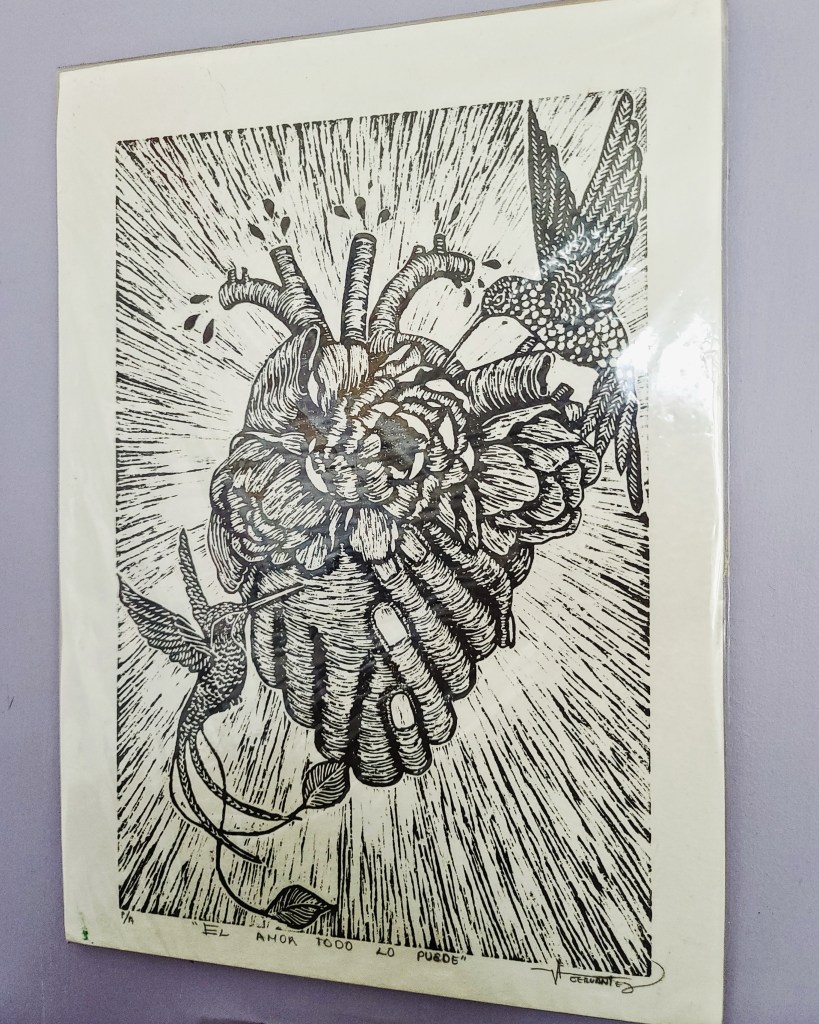
El Amor Todo Lo Puede, Artist from Oaxaca, Mexico

The term “twin flames” seems more honorable at first glance than it is because Satan is good at disguising things that destroy us as something positive. It’s this idea that if you delve deeper into your traumas, somehow, you’ll be able to overcome them and become something more, something divine. Yet this idea, without having God as the leading light to guide our souls, becomes another rabbit hole of codependency, trauma bonding, and entitlement to having someone else.

This is ultimately a perversion of what God created because He desires us to be whole before we become one in matrimony with the future spouse that He has for us.

But what if the desire underneath the twin flame philosophy isn’t entirely foreign to something God actually created?

What if the desire to experience deep connection, intimacy, unity, and something greater than ourselves is real—but we have simply looked to the wrong source to fulfill it?

One person can never be our everything. That feeling of wanting to become one with something bigger than us can only be fulfilled by the Holy Spirit.

The problem with the twin flame philosophy is not that human beings are incapable of experiencing profound connection. We absolutely are. The problem is when we take something that belongs to God and place it onto another human being.

There is a difference between saying, “God has joined these two people together,” and saying, “This person is the missing spiritual piece of me.”

The first points back to God.

The second insinuates the person is the source.

And when another person becomes the ultimate place of healing, fulfillment, identity, destiny, or spiritual awakening, the person themselves can become an idol—even when the relationship feels supernatural.

So What Exactly is a “Twin Flame?”

The term “twin flames” is a philosophy popular in the New Age world, and its popularity is increasing as our culture hyper-idolizes romantic relationships. Oftentimes, this philosophy pairs well with the belief in reincarnation, as the idea that these souls are meant to be in “every lifetime,” which seemingly makes this connection transcend time and physics.

A supernatural-sounding connection in a mundane and monotonous materialistic world will always sound good, but just because toilet water is available to drink when you’re thirsty doesn’t mean we have to be like a dog and drink from this tainted well.

In an increasingly lonely world, a relationship promising to fulfill us by getting us to mesh as one, in this ecstatic and seemingly divine union, painting daily connections as the backdrop to this union, creates the perfect set-up for the person and the union itself to become an idol.

One person can never be our everything.

But that feeling of wanting to become one with something bigger than us can only be fulfilled by the Holy Spirit.

The danger of letting one person become the ultimate place of healing for someone else, a perceived soul they deem to be their “twin flame,” ultimately dehumanizes the person and turns them into yet another tool for becoming who they are meant to be.

It’s as though the term “soulmate” has been put on spiritual steroids when it comes to a “twin flame” connection.

This is where the distinction between biblical marriage and a twin flame connection differs. A Kingdom marriage, meaning a union ordained by God, does not promise that another person will complete our soul. Scripture gives us a different picture. We are created by God, in His image, and our deepest spiritual union is not with another human being but with Him, whereas a husband and wife become “one flesh,” rather than becoming one soul. (Genesis 2:24; Matthew 19:5-6.) One flesh results from a covenantal union that God Himself established. Twin flames supposes that two people were originally one spiritual being divided into two bodies that must find each other again.

The twin flame framework can therefore tell me that another person is spiritually destined to me, while the Kingdom of God tells me first that I belong to Him. That order matters.

When Spirituality Becomes a Source of Confirmation

Many people often fall into this delusion through the use of divination tools like tarot, cartomancy (cards), astrology (stars), scrying (crystal balls/mirrors), runecasting (runes), and pendulums. Each of these divination tools is based on the belief that a higher power, a “spirit guide,” if you will, will lead them to the truth of their fate.

Fate, unlike destiny, is an occult lie that all of our life’s events are predetermined, inevitable, and outside of our personal control. This passive, resigned approach to life often allows the “spirit guide,” which is really a familiar spirit, to influence that person’s life.

While some of what these familiar spirits, which are actually demonic entities/evil spirits, may spew may seem true, they also provide false information to manipulate the diviner and create a dependency on them. These familiar spirits can speak some truth ONLY because these spirits have been following both people’s family lineages for a long time, observing them, and gaining outside information that only a spirit being can know.

This does not make them omnipresent, but because they speak to the itching ears of people, which means speaking to their desires without challenging them, the confirmation bias people get from this spirituality leads them astray while they confidently believe they are within the truth.

And this is where discernment becomes so important. Something sounding supernatural does not make it holy. Something being accurate does not automatically make its source trustworthy. Something confirming what we desperately want to be true does not mean God is the one who confirmed it.

The question isn’t simply, “Did this spiritual experience feel real?”

The deeper question is, “Who is this leading me to trust?”

Who gets to tell me Who I Am?

For many years, I was convinced that I was non-binary. I didn’t see myself as a man nor a woman.

I include this because I learned that the question of identity can become another place where we look outside of God for an answer about who we are. If I allow another person, a spiritual system, a manifestation practice, or a “higher self” to become the ultimate authority over my identity, I am ultimately asking creation to tell me what only the Creator can define.

The reality is, every person who is born from God’s spirit that is in a relationship with us is directly a gift from God, a show of His grace and His love, and forcing someone into our lives through manifestation processes shows our issues with control.

And this is where the distinction between a twin flame and a kingdom spouse begins to become clearer.

A twin flame framework can tell me that another person is spiritually fated to me, and that can empower limerence based in fantasy, a delusional obsession with someone, as well putting up with abuse in the name of “love.”

The Kingdom of God tells me first that I belong to Him, and the framework for His divine unions gives us access to better intercede for one another for God’s covering, guidance, and understanding leads them and empowers our spouses, but it is not a connection that can be used to be placed in the role of “savior, healer, prophet, destiny, or the missing piece of our souls. Jesus Himself takes that position, and empowers us to be vessels to be used to help in aspects of these positions, without ever making us the source.

That order matters.

When God brings two people together, He is not bringing together two incomplete halves that finally become whole because they found one another. He is joining two people who belong to Him and calling them to love one another within covenant.

One Flesh ≠ One Soul

Matthew 19:5-6 echoes Genesis 2:24, where God states that a man is to leave his father and mother, joined to his wife, and becomes one flesh with her. These two places in the Bible give some of the clearest examples where I see the distinction between a kingdom spouse and a twin flame. Scripture gives us language for two people becoming one, but it gives us that language within the context of covenant, not mystical soul completion. The mysticism elevates experience above being anchored in the truth of what that experience points to, moreso than what it makes us feel.

Two people becoming deeply united is a holy process. To be known, loved, challenged, supported, and sanctified alongside another person is inherently beautiful. But the holiness, purity, and spiritual strength of that union does not come from the idea that the two people were secretly one soul all along.

It comes from God.

This distinction is important, because if I believe another person is my “other half,” I can begin to believe that losing that person means losing part of myself. I can excuse sin because I believe the connection is destined. I can confuse obsession with discernment, longing with confirmation, and emotional intensity with spiritual intimacy.

But biblical love does not require me to abandon truth in order to preserve a connection. Character and actions matter more than what someone claims to believe. I can trick myself into settling with someone, if that someone feels fated.

If something is destined, I can trust God to process us seperately, while He threads our paths together organically, in a way that naturally makes us both feel seen, heard, and deeply understood. My weaknesses may be my husband’s strengths, and my strengths may be my husband’s weaknesses, which makes space for both our humanity while still holding us accountable to God’s standard of living.

Proverbs 10:22 is not promising us that every relationship God allows into our lives will be painless or that following God means we will never experience grief, waiting, disappointment, or sacrifice. God Himself leads us through seasons of tumult, and He tells us in Ecclesiastes that there is a season for everything under the sun. Rather, what Provers 10:22 is saying, is that the difference between the suffering that can accompany obedience during long stretches of isolation when being prepared for our future spouses is what equips us to receive the blessing of connection with joy, peace, and pure true love. The destruction we willingly remain in when in disobedience because we have convinced ourselves that a relationship is divinely ordained will be shown in the long hours trying to decrease the sorrow of mutual woundings, and the hours toiling to make it better by circling the same conversations while seeing no change in actions.

So What Makes a Kingdom Spouse Different?

There is an unspoken standard in our society that you aren’t complete if you aren’t in a romantic relationship. You don’t even have to get married to be seen as “more complete,” and even if the relationship is toxic, as long as you are able to portray it as fulfilling on the internet, it can easily become “goals.”

But this hyper-focus on others in romantic relationships, this fear that we will always be alone and never be chosen, and this passion that is stirred inside of us due to fleshy desires are wasted on this lie called “twin flames.”

A kingdom spouse, however, is not someone who completes what is missing in me. They are not the source of my identity or the answer to my loneliness. They are not someone I have to spiritually chase down, manipulate into loving me, or manifest into existence.

If God confirms to you that someone is meant to be your spouse, that does not mean you are released from the responsibility of submitting that desire to Him. In fact, it should make surrender even more important. If God is truly the author of the relationship, then I do not have to become the author of it myself.

This is where I believe there is also a distinction between standing for someone in prayer and standing in a relationship that God has not actually established. Prayer can be an act of love without becoming an attempt to control another person’s will. We can intercede for someone without possessing them. We can desire someone’s salvation without making their salvation dependent on whether they become our spouse.

And if someone is far from God, their spiritual condition cannot be used as proof that they are a kingdom spouse. A person can be a prodigal without being my prodigal.

If God has truly revealed that someone is meant to be your spouse, doubts, unbelief, and false views of ourselves may continuously torment the Standing Spouse, who has an intimate relationship with Jesus Christ, and covers the Prodigal Spouse in prayer. The Prodigal Spouse, like in the parable of the prodigal son, is far away from the Lord.

The Prodigal is not Proof of Possession

While the Parable of the Prodigal Son is not a direct teaching about romantic relationships or kingdom spouses there is valuable understanding and revelation that we can obtain through this teaching Jesus brings. This parable is a beautiful teaching about repentance, God’s mercy, and the joy of a sinner returning to the Father, when looked at from the perspective of the prodigal son. But when you zoom out and see the bigger picture around this parable, we can can also recognize the importance of understanding what it means to love someone who is far away from God.

The father in the parable does not manipulate the son into coming home, nor does he use divination to determine when the son will return. He does not chase after the prodigal son into a distant land and force him to repent. The Father continues to stand in faith, never losing hope that his son would come to his senses, but also not pausing his life to

The son comes to himself.

He recognizes his condition, remembers his father’s house, and returns.

This understanding is for anyone who believes they are called to stand in prayer for someone. We can pray. We can love. We can forgive. We can leave the door open. But we cannot manufacture repentance in another person’s heart.

The father could not make his son choose the father’s house. Therefore, if I’m truly trusting God with someone, I have to trust God with their free will, too. This means that I don’t need to use manifestation, tarot readings, “signs,” spiritual downloads, or obsessive interpretation to make sure the person comes back to me. I can ask God to save them because He loves them—not merely because I want them to become my spouse.

The deepest desire should therefore become: Lord, let them come home to You.

Not merely: Lord, let them come home to me.

The Difference Between a Soul Tie & Spiritual Unity

While Scripture doesn’t directly speak about “soul ties,” this term has been born from the understanding that any unholy, ungodly attachment we have made willingly or unwittingly —or that was foisted upon us— with another person. The union of this relationship has a negative, damaging influence over our mental, emotional and spiritual health, and ultimately affecting our physical health. Sexual sin, emotional dependency, trauma bonding, obsession, manipulation, and codependency can create relationships that feel incredibly difficult to break. Our souls are our mind, will, and emotions, and fornicating when not in a God-ordained husband marks our mind, will, and emotions with a depth that was only meant for covenant connection. Ultimately this shows that something feeling spiritually powerful does not mean that it is spiritually holy.

Scripture does speak about deep attachment, becoming one flesh, and being joined to another person, and this is spiritual reality of what sharing ourselves physically is still what happens when we share physical intimacy, leading to this soul exchange that leads to a soul tie that gets us stuck emotionally and psychologically, unable to move forward.

Every profound connection between two people is not a merely a toxic soul tie, but when we include physical in the mix outside of God’s covenantal order, the spiritual reality always goes into effect.

We know based on God sending Jesus to restore our connection to God shows us that God created us for relationship, as well when He says that “it is not good for man to be alone.” He created friendship, family, community, covenant, and marriage. We were never designed to live completely isolated from one another, but the distinction needs to made between two people being bound by their wounds and two people being united under God.

Needing someone to become whole and two whole people choosing to become one flesh requires a different level of spiritual, emotional, and psychological maturity. One person consuming and overly relying on another person is very different than two people allowing the Spirit of God to produce love, patience, sacrifice, wisdom, and holiness between them.

Rather than one person being caught up in an endless cycle of healing, and because the framework for the healing spans several lifetimes, there is not clear boundaries of “how much healing” one must do alone and then together to maintain the “perfect unity” that Twin Flame Connections promise, what God promises is not “perfect unity” when it comes to our mind, will, and emotions (God cares about our individuality within a relationship to do that), but rather a two human spirits fusing together points to the divine mission those two souls will be living out together. A divine covenant orchestrated by God is not solely about the romance of finding “a long lost love,” but rather it is grounded in the truth of two people creating legacy together. Those two people will deeply understand one another because both of their spirits will recognize this ancient pairing when both are submitted to the Holy Spirit.

Here, the source of the fire is God within our spirits, as our spirits are made up of light, love, wind, air, fire, and water. (I will discuss the attributes of the Spirit more in a later blog post). The other person is not the source that keeps our spirits burning. And our souls don’t need to perfectly align with someone else’s soul-experience, as those distinctions is what keeps us from demonic codependency justified by spiritual language.

This is where the image of a greater flame becomes meaningful to me. Two people can each carry what God is doing in them, and when those lives come together in covenant, what God is producing between them can illuminate something neither person could have produced alone.

That flame does not belong to either person.

God remains the source throughout the duration of the divine covenant He unfolds.

A Threefold Cord

God has consistently used this verse to show me the difference between a twin flame and a kingdom spouse. The passage itself is speaking about the strength found in companionship and mutual support; it does not explicitly identify the third strand as God. But the imagery gives us a beautiful picture for understanding what a God-centered covenant can look like.

The strength is not that two people become one mystical being. The strength is that two distinct people can be woven together under something greater than themselves.

And that something greater is God.

A threefold cord is not two people worshiping each other while occasionally mentioning God. It is not two people using God to justify their attachment to one another. It is two people whose relationship is itself submitted to the Lord.

That means the relationship has to be able to survive truth. It has to be able to survive boundaries. It has to be able to survive repentance. It has to be able to survive seasons where one person has to surrender their own desires to God.

Because if the relationship can only survive when I get what I want from it, then perhaps what I am protecting is not covenant—but idolatry.

Love does not require me to abandon truth, deny actions, or suppress how I feel. Rather, it lets me be safe in my being, holds me accountable for my actions, and values my feelings while not letting that dictate what the truth actually is. And truth is found in the Word of God – not our circumstances.

How does the devil bring up this idea of being a twin flame connection? For me, it was through the use of divination. There are an endless number of Tarot card readings freely available online that can lead you to believe that you should give access to your heart to someone that God never intended to be in your life. Being a self-identified hopeless romantic at the time, this led me to use spiritual language to become fixated with being yolked based on spiritual intensity, which is not a fitting framework. Excitement fades. Peace stays. And letting someone into the depths of your heart because it seems divinely ordained, and therefore exciting, is not a solid foundation to build a mutual legacy.

Believing that one particular person is our twin flame, or that we have the power to manipulate who that twin flame could be, fuels constant insecurities, constant arguments and breakups, and ultimately codependent behaviors that are easier to overlook with romanticized spiritual sounding language of “love conquers all.”

And while love DOES conquer all, true love doesn’t ask you to diminish yourself for a “twin soul,” nor does it ask you to wait indefinitely for someone to change for you to live out the destined path for you.

If you have to adapt to someone’s trauma and their toxic thought patterns and behaviors, then this is NOT a relationship that God sent.

Ultimately, Biblical love is not the absence of boundaries, nor is it tolerating sin because a relationship feels destined. Biblical love is not losing yourself so that someone else can remain comfortable.

True Pure Love rejoices in truth. And while Love is patient and kind, love is also not something I have to use to convince myself that what is destroying me must be inevitable and therefore be from God. (1 Corinthians 13:4-7 – what love is defined as.) God shows us what true love by honoring our free wills, and making a plan that takes that aspect of our lives into account.

What I’ve come to realize is that one of the clearest ways to discern the difference between a twin flame connection and a kingdom spouse is asking: What does the relationship produce? Does it make me more surrendered to Christ or more obsessed with another person? Does it lead me toward truth or require me to reinterpret truth? (James 3:17 — the wisdom that is from above.) Does it produce the fruit of the Spirit or continually excuse the works of the flesh? (Galatians 5:22-23 — the fruit of the Spirit.) Does it teach me to love someone as a person made in God’s image, or does it turn them into a character in the story of my own destiny? Does it make me more willing to surrender my will to God, or does it make me more determined to get the outcome I have already decided God promised me? (1 John 4:1 — testing the spirits.)

A Kingdom Spouse is not a Twin Flame with Jesus Added to It

Ultimately the distinction I had to learn was that a Kingdom Spouse is not a Christianized Twin Flame connection. A Kingdom Spouse connection values free will, surrender to God’s will, a Kingdom mandate and mission, and covenant legacy, while a Twin Flame connection takes the language of soulmates, destiny, spiritual counterparts, divine union, and manifestation to create a vague idealized love story that puts the emphasis on the outcome being your happiness, moreso than on holiness and righteousness, which is the fruit of a Kingdom Spouse connection.

The foundation has to change so the right spiritual framework can appear.

Because the Twin Flame connection framework in many ways makes the relationship itself the destination – find the person, unite with the person, heal through the person, become more through the person – the root of idolatry is inherent in its foundation.

Because the Kingdom of God makes Christ the destination, the root of the connection is holy, convicting, and sanctifying. The connection produces growth, peace, genuine love as defined by the Bible, and joy that worldly sorrow cannot destroy. This is because even before God unites a Kingdom Spouse couple, He puts us in a deeply sanctifying and refining season to prepare us to be the Biblical Spouses described in Colossians 3 and Ephesians 5.

In Christ, I’ve learned within this process that I can deeply love someone without worshiping them, I can deeply desire and long for marriage without making marriage my identity, and I can believe for God to bring someone into my life without believing that person is my missing half.

In praying for my Kingdom Spouse, I have also learned that I can pray and intercede for someone without possessing them, I can stand in faith without standing in delusional limerence, and that I can experience a profound connection without automatically calling it supernatural.

In constantly surrendering the person God ministered to me about, He’s also taught me that surrender never means I have lost my promise because if God is truly God, He does not need my “help,” (better known as manipulative action), to accomplish His will.

The person I marry will not be my savior.

They will not be my Holy Spirit.

They will not be the ultimate source of my healing.

They will not complete the image of God in me.

They will not become the throne of my heart.

There is only One who belongs there.

Will I submit to my Kingdom Husband? Definitely. Will I continue to pray for him even when we are physically joined together? Absolutely. And will I continue to choose surrendering to God’s will within this connection? I cannot see the connection succeeding without this important factor. Integrity – not perfection – is what makes us grow.

The greatest contrast between a Twin Flame connection and a Kingdom Spouse is not simply who the other person is.

It is who sits on the throne.

Matthew 6:33 — seek first the kingdom of God and His righteousness.

Colossians 1:16-18 — all things were created through Christ and for Him, and He is to have the preeminence.

1 Corinthians 6:17 — the one who is joined to the Lord is one spirit with Him.

Before I ask God whether someone is my spouse, I have to ask whether I am His.

Before I ask whether someone is my other half, I have to remember that Christ is my fullness.

Before I ask whether someone is coming back to me, I have to ask whether my own heart has returned to God.

And before I call something a kingdom relationship, I have to be willing to let the King define the kingdom.

Leave a comment

Saraí Merino Vega is a Daughter of God, a Spiritual Philosopher, and a Student of Life

She is a passionate multidisciplinary artist who loves to create art with depth to encourage spiritual reflection, spark joy and gratitude, plant seeds of faith, and inspire others to use their God-given creative talents.