Kingdom Minded or Wounded-Led?

By

36–55 minutes

To read

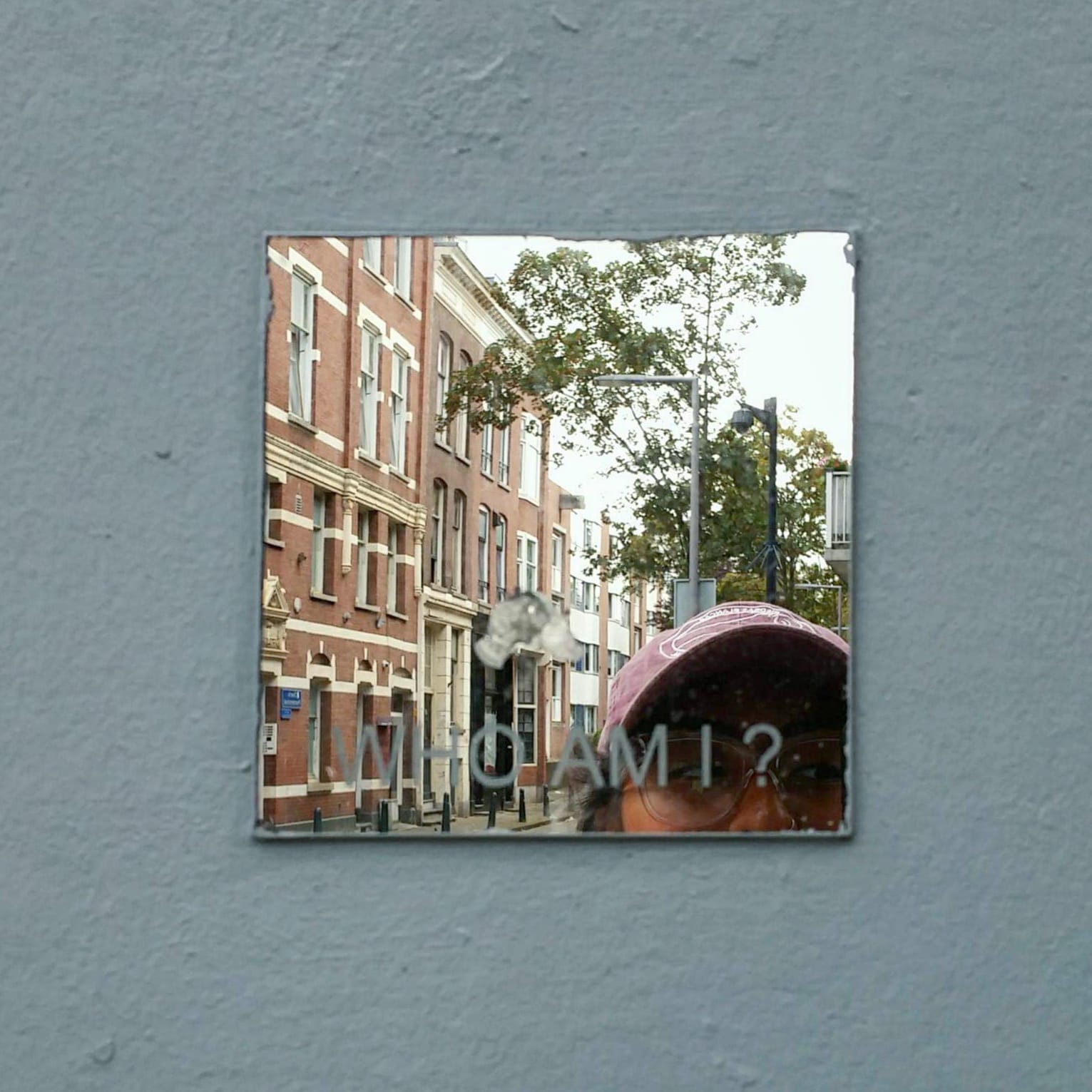
Reflection, Rotterdam, the Netherlands, November 2016

the search for myself

recently, God has been working deeply on me, uncovering subconscious patterns that, in the past, i had worked tirelessly to uncover using new-age methods like Jungian psychology, Human Design, Myers-Briggs personality tests, and both Vedic and Western astrology. the more archetypes and labels i could get, the more i felt i knew myself.

i had intellectualized getting to know myself, like many others do today. i could analyze myself, categorize myself, find patterns within myself, and then feel as though i had made progress simply because i had found another explanation for why i was the way i was. with enough scholarly support, i adopted whatever i resonated with, feeling i was a good person for adopting so many different personality traits because i thought this meant having an open mind and would make me a richer character.

everything was based on a deep desire to know myself.

i thought my problem was that i didn’t understand myself enough. i eventually realized that my deeper problem was that i had learned to trust my own understanding as the authority over myself.

i loved this because i could understand myself without actually surrendering myself. the analysis made me feel enlightened, giving me the illusion of transformation without bearing the marks of true transformation—only the speech of it.

and i think this distinction matters: wanting to know yourself is not inherently wrong. there is wisdom in self-examination. there is wisdom in recognizing our patterns, understanding our weaknesses, acknowledging our strengths, and becoming aware of the ways we affect other people.

Proverbs does not present wisdom as mindlessness. it repeatedly calls us to seek understanding, receive instruction, listen to counsel, and accept correction. the problem is not understanding. the problem is leaning on our own understanding as though it is sufficient to direct our lives.

i had begun to confuse understanding myself with constructing myself.

the more i could explain myself, the more i felt that i could control myself. the more i could label myself, the more i felt that i knew who i was. i did not realize that i could become so committed to understanding myself that i would begin leaning on my own understanding.

the wound beneath the search

it was difficult for me to see where i ended and someone else started because i made my empathy my identity. i would over-empathize and care because i felt like my sense of self was tied to that way of expression.

part of what was happening was that i had learned to monitor everyone else’s emotional state because i didn’t feel safe enough to prioritize my own. what i thought was a personality quirk was, in actuality, an adaptation to the chaos around me, trying hard to keep my head above the waters of pressure, public scrutiny, and the inner conflict within me that i numbed with spiritual language and copious amounts of weed.

this, alongside people-pleasing rooted in rejection and abandonment wounds, led me to overserve others and abandon my core needs and desires, hoping someone would come in and save me from this self-sabotaging cycle i wrongly identified as being who i was.

before Jesus, i would spend hours on end mapping out who i thought i was using each one of these systems. i delved deeper into practices that promised insight into myself and the future, eventually doing things like a Tarot card per day to “read” the energy of the day, love spreads to give me a semblance of hope rooted in fantasy that someone out there was for me, and spreads about my future because everything looked bleak to me.

looking back, i can see that my search was not simply intellectual.

it was spiritual.

and this is where i have had to be honest about the roots of what i was participating in.

when self-discovery became spiritual

each system promised me something that looked like another puzzle piece i had been searching for all my life to finally unlock the puzzle of me.

why was i the way i was?

if i knew this, and knew how to transmute energy, i could be like a sorcerer who changes energies into the energy that they need. i wouldn’t need another human being. i would be all-powerful, with the weight of the universe backing me.

it was delusional self-confidence built on something the Lord explicitly calls evil in His Word.

Jungian thought gave me archetypes through which i could interpret the hidden parts of myself. the hiddenness of a depth i felt made me richer than the superficial people i felt surrounded me.

Human Design gave me a highly elaborate spiritual framework through which i could understand my supposed energetic design. this spiritual design made me believe that the sensitivity i had was working to my advantage and for the good of others, without putting any clear boundaries in place. if anything, it gave me spiritual language that anchored my understanding in something that felt real.

Myers-Briggs gave me categories through which i could understand how i perceived and interacted with the world. it reframed the rejection i felt as another way to see my “otherness” as what made me more special than others, and that my job was to show how special i was so others could then see how special they were.

it gave language to an inherently narcissistic spirituality based on proving oneself rather than being one’s true self, despite all the talk about “be yourself.”

astrology gave me charts that appeared to map identity against time and space. it gave me language to excuse my procrastination based in fear and anxiety, and gave me a “cheat code” to why certain people didn’t like me that didn’t show me where i had been in the wrong, but instead gave me wording to justify why i was in the right.

it was never what i did—it was what the stars influenced me to do.

and for someone afraid of looking bad, given the healing figure i so badly wanted to be, accountability was one of my worst fears.

eventually, divination gave me a way to ask questions about the future and receive what felt like answers. many of those answers seemed to contain some aspect of truth, but each only fed my over-reliance on these spirits to lead me.

these systems came from different intellectual and spiritual traditions, and i do not think it would be honest to say that Jungian psychology, personality frameworks, astrology, Human Design, and Tarot all functioned identically. but in my life, they converged into one larger project of self-discovery, and eventually some of that search became explicitly divinatory.

the psychological language gave me explanations; the divinatory practices eventually gave me answers. both became part of a larger pattern in which i was looking outside of surrender to God for authority over myself and my future.

i was not approaching these things with the intention of worshipping evil.

my intentions were, in my mind, pure.

i wanted to know myself. i wanted healing. i wanted wisdom. i wanted to understand why i experienced the world the way i did. i wanted to know whether i was loved, whether i had a purpose, whether there was something greater than what i could see.

i was looking for answers that would resonate deep down to my core, so i could feel alive again, and so that joy i had as a child that had been sacrificed in the name of “growth” would make a home in me once again.

but counterfeit growth has deep roots in a void that only ever takes and never gives back.

pure intentions without truth

i was also deeply insecure, and i needed a voice that would soothe that pain, believing that soothing it meant i was healing it.

the voice would paint my pain as something that made me inherently more chosen, more spiritual, more deserving than others. this soothed the pain of rejection that was actually hiddenness, the pain of being misunderstood that was actually character formation, and the pain of not loving myself the way i wanted to, which was really my perspective being shaped by my own understanding rather than by God’s truth and grace.

what did i actually need underneath the answers these systems promised me?

to know who i was. to be seen. to understand why i existed the way i did.

these were threads that looked like truth because they gave me language for things i felt had often gone unnoticed, or not seen as being inherently connected.

i knew that the mind, our hearts, and our souls needed something that would be bigger than us, but i didn’t realize that meant God.

i thought it meant more power based in self-actualization, more self-mastery based in the integration of darkness, and more healing based in blind acceptance—which was really resignation to what was happening around me that i dressed up in spiritual language so i wouldn’t have to face the fact that, deep down, no matter what healing modality i found myself in, i felt deeply and utterly helpless, directionless, and worn out from doing everything on my own.

that loneliness fueled the search.

that was part of what made the deception so difficult to recognize. it was counterfeit truth that promised me what i wanted to hear without doing the hard work of actually feeling everything i was going through. instead, i could dress it up in spiritual language, bypass those feelings, and obtain healing through a spiritual framework that felt like the shortcut i had desperately been looking for.

i wanted to work smarter, not harder.

but sometimes “smart work” is hard work because God calls us to integrity in all we do, including the healing journey.

pure intentions without truth did not lead me into freedom.

they led me deeper into bondage.

the problem wasn’t that i had evil intentions. the problem was that i trusted my intentions more than i tested the source.

sincerity does not sanctify a source.

i realized that we can be sincere and deceived, that i could be seeking healing and become more bound, and that i could want truth while looking in the wrong place.

that was the difficult lesson i had to learn and digest in the depths of my soul.

the enemy used the shame around the deception to create a narrative of fear of deception. if i had been deceived so much and for so long, what was stopping him from doing it once more, even while being in Christ? how could i know for sure that the voice i was hearing now was truly the Lord’s? how could i discern the difference without giving in to paranoia?

every answer always brought me back to:

surrender.

i previously thought:

“i want something good, therefore this must be good.”

but biblical discernment asks:

“is this actually from God?”

those are completely different questions.

Proverbs teaches me that wisdom is not merely the ability to recognize what sounds good. it is the humility to seek the Lord, receive instruction, test what i think i know, and remain willing to be corrected.

the mind is a tool, not a master

there is a difference between using my mind and making my mind my master.

God gave me a mind. He gave me the ability to think critically, make connections, recognize patterns, ask questions, and seek understanding. the problem was never that i wanted to understand. the problem was that i had begun to place my understanding above my surrender to Him.

He made the connections for me, only inviting me into the journey of discovery through trusting that He will reveal what needs to be revealed at His perfect and appointed time.

i thought what i needed was to ask a question, get an answer, and then do the action. but God is not an oracle; He is personal. He invites me into relationship rather than offering Himself as a mechanism for obtaining answers.

God asks for the creation of relationship through surrender, the growth of discernment through the renewal of our minds through His word, obedience to Him in action so that we can see His word in action, and patience for the internal work He is doing within us. that work does not always produce the fruit right away that we are looking for to confirm that we are on the right path.

He gives further revelation through the uncovering of His word, which is how we first seek His righteousness, so that all these things can be added onto us.

the order matters.

faith does not require the abandonment of thought. it requires the surrender of thought to God. i can think deeply without trusting myself absolutely. i can question without making the questioning my authority. i can seek understanding while remaining teachable.

the counterfeit of certainty

bondage was the constant chase for spiritual validation, spiritual understanding, and constant proof that i was the person the universe was telling me i was.

i never fully believed, because deep down there was a dissonance. it felt like i was constantly spiritually gaslighting myself to trick my subconscious into accepting the positive things my trauma brain kept rejecting because of the fear of heartbreaking outcomes.

the Tarot helped solidify my fantasy of building something with someone into a reality, making it feel destined and giving me evidence of the spiritual depth of something i had with someone, or was meant to have.

the shifting answers made my hope waver constantly, always seeking because clarity was only ever short-lived. doubt and confusion would hit me like a wave of emotion that i thought the answers had already dealt with.

i would expect others to have constant grace with me in my process, but i could not have grace to that same extent. unintentional wounds made me paint people as spiritual enemies to the enlightenment i had “earned” through pain.

every thought reinforced the bondage of constant spiritual affirmation that was just another layer of the people-pleasing i had been trying to escape.

everything led to a deep inability to accept reality and deeper dependence on spiritual practices i only had superficial knowledge about, having divorced them from their original historical practices because doing so felt soothing.

i was rebelling against the “White Man Christianity” that had killed so many of my ancestors. i saw Jesus as just another victim of manipulation. a man that was elevated to a place of a god was an example for all of us “gods,” but the religion itself was wrong. i didn’t think i needed saving.

re-connecting to indigenous spirituality felt like true “Holy Work.”

i had lost so much of myself after having faced so much evil seemingly alone, without the backing of the Lord, although that isn’t to say His grace and mercy weren’t evident in my life.

they were.

God was present even when i did not have the spiritual eyes to recognize what His presence meant.

His grace was evident before i had the language to call it grace. every time i chose to keep loving, that was His grace.

His mercy was evident before i understood the source of it. every time i chose to keep forgiving, that was His mercy.

every time i chose to continue to live, that was Him strengthening me.

God was there before i recognized Him correctly.

a thread of truth does not make the garment true

i was too spiritually blinded to see the truth of the spiritual power i was operating in. i was relying upon spiritual sources that were not the Holy Spirit while believing, because of my intentions and experiences, that those sources were benevolent.

what i thought was benevolent, because i approached it with benevolent intentions, was not necessarily from God.

God had to reveal to me that our intentions cannot be the determining factor behind the spiritual source of something. this was what my wounded self needed to learn, not to shame me, but to free me from the cage of spiritual language that only ever ended in fantasies that held no real spiritual weight.

counterfeit wisdom is spiritual fluff that leaves us wanting more than we have received. it creates a thirst that can only be satisfied through a real relationship with the source of all true wisdom: the Holy Spirit.

i had been relying on spirits that were not the Spirit of God, while assuming that because i wanted good things, whatever answered me must also be good.

i did not yet understand that sincerity does not make something spiritually true.

i could be sincere and still be deceived.

i could want healing and still reach for something that could not heal me.

i could want wisdom and still seek it from a source God had not instructed me to seek it from.

the enemy does not have to present deception as something obviously evil. Scripture warns us that Satan can masquerade as an angel of light.

what made my participation so difficult to recognize was that some of what i encountered seemed to contain pieces of truth: introspection, self-awareness, archetypes, the desire for healing, the language of energy, the search for meaning, the desire to understand human behavior.

there was enough that felt insightful to keep me searching, and enough recognizable truth to make the deception believable.

but a thread of truth does not make the entire garment true.

an archetype Jung describes can feel illuminating because it connects a confusing personal struggle to what is presented as a timeless, universal human pattern. it gave me a shortcut to understanding people and whether their perceived function in life would work with my own, whether i had actually taken the time to know them or not.

the personality descriptions the Myers-Briggs quiz gave me felt validating, in part because general statements can be easily believed and applied specifically to ourselves. these personality categories also helped me mentally characterize people in ways that limited their behavior to things i could understand. if they acted outside of that framework, i could see it as a red flag that something was wrong with them.

it offered a semblance of boundaries without actually teaching me what my values and ideals were.

i would even chalk disagreements up to “personalities not matching,” which made it easier for me not to be invested in others. i had already judged who they were once they told me their personality letters.

a natal astrological chart felt objective because it created a “scientific-like” framework around something tangible that we could experience and see daily.

the night sky always came alongside the sun. the stars would be visible enough that they made me feel less alone.

and looking at that vastness, believing how amazing we are because we see ourselves in this first heaven, made me see myself in a way that made me feel more divine, not realizing that the heavens were made to glorify the name of the Lord.

lastly, signs that felt serendipitous encouraged me to keep going down the spiritual road i was finding myself on because it felt as though the whole universe was aligning with my desires, and that all i really needed to create my own reality was belief.

but this meant letting superstition and emotionalism, rather than peace and wisdom, lead my life.

the lesson for me was not that every observation i had made was false. it was that an observation can be true without the framework around it being my authority.

when anxiety became discernment

i was emotionally, spiritually, and mentally feeding something i did not understand with the fear, worry, anxiety, stress, and anger i kept feeling but not healing.

i even began creating demonic altars filled with “signs”—often feathers i felt an angel had dropped, or crystals intended for healing that i believed vibrated in a way that could move the deepest part of me.

the more afraid i became, the more i searched for answers.

the more uncertain i felt, the more i wanted signs.

the more i wanted certainty, the more i interpreted coincidences as confirmation.

i assigned authority to signs that led me to be easily manipulated by other people.

all i had to do was get a feeling that reminded me of something that had previously excited me. that meant my nervous system had spiritual and psychological language to glorify chaos as an answer and confusion as mystery.

looking back, i can see how the psychological and spiritual patterns reinforced one another. anxiety made uncertainty feel threatening; the search for signs gave that anxiety an interpretive framework; and the framework then gave me more reasons to search.

peace was far from me, though i stated that was the only thing i was looking toward.

wisdom was far from me, though i stated that i had the answers that other souls were looking for.

joy was far from me, though i stated that joy was easily achievable with the right mindset.

in actuality, i had mastered spiritual language to disguise my anxiety as a guide, my understanding as true wisdom, my resignation as acceptance, and my pain-fueled paranoia as discernment.

i had learned how to make chaos sound holy.

and eventually, the Lord gave me a revelation:

i had only ever worn masks to survive a world that kept shutting me up, rejecting my essence, and belittling what i had to offer.

i thought i was discovering myself.

in many ways, i was trying to create myself.

i was trying to create myself through all of these different tools to cope with the reality that i didn’t feel as healed as i claimed to be, that i wasn’t as confident as i had made myself seem, and that i wasn’t as hopeful as i had shown myself to be.

coping mechanisms became the fuel for who i saw myself as—the “higher self” version of me that i was always reaching toward but never actually becoming.

i was asking, who am i?

when a deeper question was underneath it:

who do i need to become to finally be seen?

i wanted to be seen

i didn’t merely want an identity.

i wanted someone to recognize it.

i wanted to become the best version of myself because i wanted to heal the wound i didn’t want to actually admit: that no matter what i did, i never felt “good” enough nor “chosen” enough.

i would use my relationships to try and prove this to myself, often turning certain behaviors into hoops a person had to jump through.

if i pulled away, i wanted them to chase after me.

if i punished with silence, i wanted them to show me how much i meant by showering me with attention.

if i needed to feel affirmed, i would ask and ask for reassurance, never feeling like it was quite enough.

what i wanted was to be worshipped for the image of perfection i had been reaching for, to be rewarded for reaching for that image in the first place, and for others to do the same so it could give the semblance of truth that unity often can evoke.

all of these were patterns that did not die until i began surrendering my emotions, wounds, puffed-up arrogance, and everything else to the Lord.

i wanted to know who i was because i wanted to be seen.

i wanted someone to see me fully.

not the mask.

not the personality type.

not the archetype.

not the version of me that adapted perfectly to the room.

not the version of me who knew how to care for everyone else.

i wanted to be seen for who i truly was.

because i had spent so much of my life feeling unseen, i thought perhaps i could finally find myself if i could just find the right system that could explain me.

even in rooms where others would laugh about the same things, i already carried a strong conviction not to do certain things. i was a sensitive soul, and i cared deeply about how others felt, but that also had to do with the fact that i felt my emotions were burdensome for others.

i felt that if someone could just make space for all that i felt, i would be seen.

that changed after friend and romantic breakups led me to internalize that my big feelings were something that needed to be filtered because i was too much for others.

so my hope of being seen through having all my emotions seen dwindled as i settled for being seen as a “healer.”

in this way, the role i played allowed emotions to flow, and the empathy i felt and the space i held for another became something i lived vicariously through.

seeing them became a way for me to be seen.

this was why my actions never seemed bad, but the heart posture behind them showed that they came from a wounded place.

healing or performing?

it wasn’t until i grew up and matured in the Lord, constantly choosing to remember that my identity in Him is what defines me, that i finally realized my previous thought process was rooted in an intellectualizing, survival mentality—a wounded one—rather than a Kingdom-minded one.

a wounded mentality asks:

how do i understand myself enough to protect myself?

a Kingdom-minded mentality asks:

how is God calling me to walk?

so was my desire to know myself better inherently wrong?

no. it never was.

God does not oppose us knowing ourselves. but that fullness can only be rightly understood within the purity of His embrace. when we know we are so loved by our Heavenly Father, we can more clearly see ourselves not only through our mistakes or failings, but through the good things He calls us to live as a standard of holiness.

be holy because He is holy.

but when we fall from the standard, He doesn’t shame us. rather, He offers a hand to be pulled up to the standard, and that hand can only be grabbed through surrendering our own understanding to His Word and grace.

i was leaning on my own understanding because it was familiar.

i had learned to trust analysis, patterns, labels, signs, and systems because they gave me something concrete to hold onto. and when i turned toward God, it was difficult when He seemed to clarify only one aspect of the issue instead of giving me the complete answer i wanted.

i was used to being fed answers directly and moving from there.

i was used to giving myself over to something else so i wouldn’t have to think too hard.

i wanted God to function like an oracle when God wanted relationship and obedience.

but He is so wonderful that He equipped me instead with critical thinking based on His wisdom rather than basing my thought processes on figuring out how different signs connect.

He made the connections for me, only inviting me into the journey of discovery through trusting that He will reveal what needs to be revealed at His perfect and appointed time.

i thought what i needed was to ask a question, get an answer, and then do the action.

but God is not an oracle; He invites relationship.

He asks for surrender, the growth of discernment through the renewal of our minds through His Word, obedience to Him in action, and patience for the internal work He is doing within us.

sometimes that work does not immediately produce the fruit we are looking for to confirm that we are on the right path.

and sometimes further revelation comes through the uncovering of His Word, which is how we first seek His righteousness so that all these things can be added to us.

faith does not require the abandonment of thought. it requires the surrender of thought to God.

God has not called me to become intellectually passive.

He has called me to acknowledge Him in all my ways.

there is a difference between using my mind and making my mind my master.

there is a difference between discernment and making myself the final interpreter of everything i experience.

there is a difference between self-awareness and self-worship.

self-awareness can look honestly at the good, the bad, and the neutral without making claims about what any of those things ultimately make us. self-worship takes the good and the bad and uses both to elevate ourselves toward the “higher self” we have been dreaming of becoming once the majority of healing is done.

when we make the self the ultimate interpretive authority, it can look like self-confidence, but really it is ego dressed in spiritual language to make pride look like an impressive feat.

this is where i now see the difference between healthy self-knowledge and self-sovereignty and the difference between examining myself and making myself the ultimate authority on who i am.

not everything that explains me has the authority to define me.

God can give us definitions of what is happening while also teaching us to feel what is happening with Him.

He does not ask us to become less human to become more spiritual.

He invites us to bring our whole selves before Him while still asking us to relinquish the authority to name ourselves to Him.

He wants to name us from a pure place of love, not from a place of survival.

and healing with God means going into a process that requires surrender, not more striving to achieve that “healed” reputation.

what if healing isn’t something i can perform my way into?

transformation is one thing; performing transformation is another.

to transform, a pure and honest heart needs to be reborn from the ashes of the old, and that can only be done through God Himself.

the heart is desperately wicked—who can know it?

the Lord states this in Jeremiah, and it encompasses the deceptive nature of a sin-filled heart.

but i do not read this as a command to distrust every act of self-examination or to believe that nothing true can ever be known about me. rather, it reminds me that my heart cannot be my ultimate authority or interpreter. i need the Lord to search me, correct me, and reveal what i cannot see clearly on my own.

but when we let Him examine us, He starts to burn up the things that no longer suit us because they do not glorify Him.

everything that glorifies God does not necessitate human perfection.

rather, it is an honest show of our humanity, an honest wrestle with what He says, and an honest willingness to be changed by Him despite not fully understanding Him just yet.

to experience true healing requires a leap of faith that defies everything we have ever believed, with the belief that Truth will truly set us free.

i had been trying to become throughout all these practices.

being busy in constant becoming, analyzing, practicing, and searching made me feel like i was doing the work.

but constantly trying to arrive at some version of myself that finally felt complete isn’t the same thing as actually doing the hard work of healing.

arriving toward something only fuels excuses dressed up as grace.

when in actuality, grace empowers us to honestly and transparently look at ourselves, our actions, our thoughts, and our understanding, and to choose the path of integrity above the deceptive comfort spiritual fluff offers.

Proverbs calls this teachability: wisdom is not merely knowing myself; it is being willing to receive correction when what i know about myself is wrong.

looking healed is posting an inspirational quote on social media while still keeping the same nasty attitude at work.

one can be faked up until a point, until the wound is triggered once again.

whereas real healing gives you the moment of peace needed when the trigger appears to choose differently in the moment.

every healing moment then does not become fuel for your Instagram popularity, but rather becomes sacred inner work that only God Himself is present for.

not everyone needs to see your weakness to know that you are still human.

often, those who look for your weakness have only learned to trauma bond, which is the wounded-led mindset in action.

God was teaching me that transformation is not the same as self-construction and that healing could not be feigned for long.

true healing needed the fire of oppression, rejection, misunderstanding, and being unseen.

that’s when you could see if you changed for the audience of others or the audience of One.

one is dependent on the audience, while the other is anchored in the presence of God.

when the path isn’t the easiest one

rather than forcing a path, God shows you the path to take, which obstacles to take head-on, and which are distractions that only serve to elongate the warfare period in our lives.

He teaches us to take not necessarily the path of least resistance because although God does provide ease and rest, there are also seasons of tumult, seasons where obedience requires us to walk directly through a storm.

the point is not that God’s path is always difficult.

God provides ease and rest, but His path isn’t necessarily always easy.

the standard of holiness, justice, and integrity can feel unbearably heavy to a perfectionist.

but when that mindset is transformed through the renewal of our minds in His Word, we can remain strengthened in our conviction no matter the storm we face.

the point is that ease is not the same thing as confirmation, and difficulty is not the same thing as abandonment.

sometimes God gives us rest.

sometimes He gives us endurance.

sometimes He calms the storm.

sometimes He teaches us to remain with Him while the storm is still raging.

Proverbs reminds me that wisdom does not mean having enough information to guarantee the outcome. sometimes wisdom looks like trusting the Lord enough to take the next faithful step.

when blessings become confirmation

the Kingdom-minded life therefore cannot be built around external circumstances alone.

there is a season to everything under the sun; thus, being still before the Lord equips us with the understanding of which time and season we may individually be in, rather than basing it on external factors like social media popularity, monetary wealth, or even good things like a new family, lots of friends, and marriage.

once i stopped using identity systems to tell me who i was, i also had to stop using external circumstances to tell me whether i was becoming who i was supposed to be.

good things are not inherently a God-thing.

there is a danger in using blessings as the anchor to confirm our identity.

blessings come and go, but the Word of the Lord never changes.

a thing can be good and still not be what God is asking of me in this season.

a marriage is good.

family is good.

friendship is good.

financial stability is good.

recognition can be good.

a new opportunity can be good.

but none of those things, by themselves, can tell me whether i am walking in obedience, and none of them can be the foundation for identity.

external blessings, when not surrendered to God, can fuel wrong conclusions about who we are and build spiritual pride—what is best known as self-righteousness.

for example:

“if i have this, i must be successful.”

“if this relationship works, i must be in God’s will.”

“if i get this opportunity, God must be confirming who i am.”

that’s the same basic mechanism as the earlier systems i was living by, where i relied on external evidence to be the marker of identity certainty.

i had spent so much time looking for external confirmation that i could mistake receiving something i wanted for receiving something God had ordained.

“seek first the Kingdom of God,” He says.

the order matters.

not the relationship.

not the status.

not the identity.

not the sign.

not the answer.

not the manifestation.

not even the healing itself.

the Kingdom.

faith is not denial

i wanted to play different roles because i thought that meant living a fuller life, not knowing that the fullness of life would be found through being myself—not based on what i observed others said that they were themselves, but based on embracing the Holy Spirit that God had poured into me and following the specific instructions He gives me to follow.

these roles were not merely intellectual experiments, but expressions i adopted over the years that i tried on like costumes, thinking this was “finding myself.”

even if the labels weren’t completely accurate, i would force myself to fit into them because they helped me make sense of my inner world after years of feeling that i was nothing more than an awkward first-generation Mexican girl.

i also felt like a chameleon, which helped me justify wearing different masks for different contexts.

i was proud that i could go with the flow, not understanding that what i was actually doing was finding justifications for not having solid boundaries or a full sense of self.

and i want to spend more time here because this was one of the places where the wound disguised itself as a strength.

i called it adaptability.

i called it being open-minded.

i called it going with the flow.

i called it trusting the universe.

i called the constant appearance of “signs” evidence that i was adapting to whatever life was bringing me.

but sometimes what i called adaptability was actually a refusal to face reality.

the “signs from the universe” could create a kind of delusional optimism in which i could continue believing that something was going to change because i had found another sign that seemed to confirm it.

instead of allowing reality to dictate what was actually happening, i could reinterpret it until it fit the story i wanted to believe.

i developed a deep-seated habit of finding patterns, interpreting ambiguous events as confirmation of an outcome i desperately wanted, and allowing hope to override evidence that contradicted the story.

i believed fate was something i had to align myself with through constant positive thinking.

that is not the same thing as faith.

faith in God is not pretending that the storm is not a storm.

faith is looking directly at the storm, feeling the wind, acknowledging the fear, grieving what has been lost, recognizing what has not changed, and still choosing Jesus.

faith does not require me to deny reality to believe God.

even on a day that is difficult emotionally, i can find comfort in the fact that God is in control and that He is faithful to His Word.

not everything relies on my perfection, as new-age thought would lead me to believe.

faith requires me to face reality without allowing reality to become my god.

true adaptability is deciding to respond wisely to changing circumstances while remaining grounded in my convictions and in who God has called me to be, rather than changing based on who is in the room.

chameleon behavior is wearing a bajillion masks, where the environment seems to require a constant change to self that feels useful because it makes us palatable to other people.

but in reality, diminishing ourselves to fit into different masks means that we don’t have a stable enough sense of self or a boundary to remain grounded in.

i can say:

“this hurts.
i don’t understand.
nothing appears to be changing.
i am afraid this will never happen.”

and still say:

“Jesus, i choose You.”

that is different from using signs to convince myself that what i want must eventually happen.

faith does not require me to believe that the thing i want will happen.

faith requires me to believe:

God is faithful whether or not the thing i want happens.

self-mastery cannot save me

the systems i used gave me a sense of control.

if i understood myself enough, maybe i could prevent pain.

if i understood people enough, maybe i could prevent rejection.

if i understood relationships enough, maybe i could prevent abandonment.

if i understood spirituality enough, maybe i could prevent uncertainty.

if i understood myself enough, maybe i could finally become safe.

and underneath all of it was the question:

can i save myself through enough understanding, discipline, healing work, and self-mastery?

the answer is no.

i cannot transform myself into salvation.

i must surrender to the One who transforms me.

this understanding came after these practices started further unraveling me psychologically, leading to an extreme loss of identity and derealization due to previous trauma.

to me, these tools were the answer to transcending into becoming who i was always meant to be, so despite the negative things coming up, i saw them more as confirmation that the tools were working.

my quest for constantly becoming, rather than a way of life, dwindled into a routine of practicing new-age religious patterns that made me feel that the spirituality i was practicing was tangible and grounded in something real, and that it was the true path to being all that i was purposed for in this world.

i felt that life had to have a deeper spiritual, profound meaning, and if it meant going through hard things to become a healer for others, i found that worth the unraveling.

because deep down, i equated being needed with being seen.

i wanted proof that i was becoming someone.

i wanted proof that i was healing.

i wanted proof that i was special.

i wanted proof that i was finally understanding myself.

and underneath all of that was something much more tender:

i wanted to be seen.

whose am i?

astrology charts could be written out and mapped against time and space, making me feel as if i were an intrinsic part of something greater, something divine.

Jungian psychology delved into archetypes that seemed to give language to parts of myself i could not articulate.

Myers-Briggs felt like another aspect of the puzzle, answering the question i kept coming back to:

who am i?

there were pieces of language that felt illuminating because deception works through something that resembles truth.

some frameworks helped me articulate things i had struggled to put into words.

some concepts seemed to explain why i felt different.

but the existence of something insightful did not mean that it was the source of truth i was called to follow.

that is one of the hardest things i have had to learn about discernment.

not everything that explains you has authority over you.

not every framework that gives you language for your pain has the power to heal it.

not every answer that gives you certainty is an answer God has given you.

and not every spiritual experience is an encounter with the Holy Spirit.

what i didn’t realize was that in my search for becoming and finding out who i was, the source of my quest was not ultimately a desire to discover the truth of who i was, but to create who i was based on findings that seemed to have a logical end—a logic based in human understanding and, eventually, occult sources that i now understand only led me further into deception.

i was trying to become someone i could finally recognize.

but God was teaching me that i did not need to construct an identity in order to become worthy of being seen.

i needed to learn whose i was.

the deepest clarification for me has been this:

healthy self-knowledge is not the enemy. but self-knowledge can become an idol when knowing myself becomes more important than knowing God, and when understanding myself becomes a substitute for surrendering myself to Him.

Kingdom-mindedness is not the absence of self-awareness. it is putting self-awareness underneath God’s authority.

it is allowing God to tell me what is true even when His truth confronts the story i have built about myself.

self-knowledge is not self-construction.

we are the clay, and He is the potter.

He is the builder, the architect, and we are His Holy Creation.

i do not create the blueprint. i respond faithfully to the Architect.

rather than constructing ourselves from nothing, we are discovering who we truly are and building the habits, mindsets, and actions we must take daily to participate in what God has revealed by His grace according to His Word.

His grace is His unmerited favor to do something He has called you to do.

nothing you can do can make you earn this grace.

it is only through surrender and the acknowledgment that we cannot do it on our own, but rather that we need the power of God that strengthens us to walk His narrow path.

ultimately, the difference between self-construction and healthy self-knowledge is found in the distinct questions both pose.

self-construction asks:

“what can i determine about myself so i can become whoever i want or need to be to gain the desires of my heart and achieve the dreams i have?”

healthy self-knowledge asks a completely different question:

“what is true about me?”

it is allowing Him to show me where my wounds have become identities, where my coping mechanisms have become personalities, where my lack of boundaries have become “adaptability,” where my optimism has become denial, where my striving has become “healing,” and where my desire to be seen has caused me to look everywhere except toward the One who has always seen me.

i spent years asking:

who am i?

now i am learning to ask:

who am i in Christ, and what is God asking me to do with who He has made me?

my identity was not abandoned, but transformed and relocated into a whole new realm of understanding.

because i am learning that the answer was never found in becoming everything i could imagine myself to be.

it was found in surrendering the masks, laying down the striving, and allowing the Lord to transform me into the person He already knows me to be.

i don’t need to manufacture myself.

i don’t need to perform healed.

i don’t need to chase signs to prove that i am on the right path.

i don’t need to deny the storm to prove that i have faith.

i can face what is true, bring it before God, and remain. sometimes, silence is an act of faith.

and sometimes Kingdom-mindedness looks less like receiving another answer and more like trusting God with the unanswered question.

because the goal was never simply to know myself.

the goal is to know God—and from knowing Him, to finally learn who i am.

what Kingdom-minded living looks like

so what does Kingdom-minded living actually look like now?

it looks like including the Holy Spirit in everything i do.

it’s asking Him to guide me in difficult conversations, finding comfort in God’s Word and His presence, and asking for the assignments He has for me.

it’s surrendering the dreams He gives me back to Him so we can build what He has called me to build together.

it’s meditating on God’s Word until i start to see myself living it out.

it’s being quick to forgive, to repent, and to have an understanding heart.

it’s being quick to listen and willing to receive correction, because wisdom is not simply knowing what i believe—it is being teachable enough to let God correct what i believe.

it’s allowing God to correct me without making correction an attack on my identity.

it’s learning to discern without needing to have every answer immediately.

it’s resting in Him even when the only thing i can see next is just the next step He gives me.

it’s trusting that the process i find myself in is doing something good and holy, even if it doesn’t feel like it, and even if i don’t fully understand.

it’s remembering that i don’t have to understand everything to obey what He has already made clear.

but most importantly, being Kingdom-minded means embracing life, whether it’s storms or not.

choosing to be joyful to be given another day.

being grateful for the provision we have, the loved ones still present, the nature that worships God.

it means allowing myself to live in the ordinary instead of constantly searching for the extraordinary to tell me what my life means.

it means letting God meet me in the ordinary, not just searching for Him in the extraordinary.

it means letting God meet me in the places where there is no sign, no dramatic revelation, no immediate answer, and no obvious confirmation.

because sometimes faith looks like continuing to obey when there is nothing new to interpret and choosing to enjoy the journey of aligning more and more with the heart of God through surrender and obedience.

ultimately, what i have learned is that healthy self-knowledge helps me recognize what is true about myself, while wounded self-construction tries to determine who i must become to finally feel safe, worthy, understood, or seen.

the first asks me to honestly examine myself before God.

the second asks me to continually construct myself before others.

and i think there is freedom in realizing that i was never meant to carry the burden of constructing an identity that God has already given me.

i don’t have to manufacture an identity to become worthy of being seen. i can receive my identity from God, submit my understanding to Him, and allow Him to transform me.

a meditation

i want to leave you with this to meditate on—some affirmations dealing with psychology and mindfulness, but within the framework of faith:

  • i can acknowledge what i feel without allowing feelings to define truth.
  • i can examine and know myself without worshiping myself.
  • i can recognize a wound without making the wound my identity.
  • i can use my mind without making my mind my master.
  • i can pursue healing without performing healed.
  • i can have dreams without making them my god.
  • i can face unanswered questions without needing an oracle.
  • i can acknowledge uncertainty without running toward divination.
  • i can face disappointment without manufacturing signs.
  • i can wait without interpreting waiting as abandonment.
  • i can receive good things without making them idols.
  • i can receive an identity without manufacturing one.
  • i can hear other people’s perspectives without abandoning my own boundaries.
  • i can think critically while submitting my understanding to God.
  • i can remain with Jesus even when the physical circumstances haven’t changed.
  • i can receive correction without believing that correction makes me unworthy.
  • i can be wrong without becoming hopeless.
  • i can ask questions without demanding immediate answers.
  • i can seek wisdom without needing to be the wisest person in the room.
  • i can be teachable without abandoning discernment.
  • i can surrender what i do not understand without pretending that i understand it.
  • i can trust God without needing every unanswered question to become an answer.

Leave a comment

Saraí Merino Vega is a Daughter of God, a Spiritual Philosopher, and a Student of Life

She is a passionate multidisciplinary artist who loves to create art with depth to encourage spiritual reflection, spark joy and gratitude, plant seeds of faith, and inspire others to use their God-given creative talents.